
Small seeds, big impact: supporting your body after 40
Protein, calcium and fibre are the three nutrients I like to keep in check. The importance of protein intake as we age is well known, calcium is essential for bone health, and fibre is fundamental for a well-functioning gut — and much more.
Well, it’s not that simple. To truly understand how nutrients work together takes a lot of reading and education, and since it’s not my intention to give a lecture here, I’ll just make a few key points and build from there.
First and foremost, if you have a balanced diet, chances are you’re getting the nutrients you need.
Choosing whole, nutrient-dense foods is always a winning strategy. There’s nothing better than getting multiple nutrients from one food, and whole foods are perfect for that.
Get calcium from food sources rather than supplements. Too much calcium in supplement form can accumulate in the arteries.
When it comes to bone health, calcium is not the only nutrient that matters. We also need magnesium, adequate protein intake, vitamin D and vitamin K2. Magnesium converts vitamin D into its active form, which is necessary for calcium absorption, and vitamin K2 helps direct calcium from the blood into our bones instead of allowing it to build up in the arteries.
But how much of these nutrients should we eat to properly support ourselves?
People’s requirements vary, but as a general rule, the desirable daily protein intake for women 40+ is between 1g and 1.2g per kilogram of body weight if the goal is maintenance and bone health. If the aim is to build muscle and lose weight, it should be slightly higher, between 1.2g and 1.6g. Very active women may benefit from around 2g of protein per kilogram of body weight.
How you eat protein also matters — and guess what? Balance is the answer again. By spreading your total daily protein across 3 or 4 meals, you not only support better muscle protein synthesis (since the body can only use a certain amount at once), but you also ensure your body is nourished throughout the day.
When it comes to calcium, the recommended daily amount differs depending on the country you live in. In the UK, for example, the recommended daily intake for women 40+ is 700mg per day, increasing up to 1000mg for women 50+ if they are on certain medications.
In Europe, it is slightly higher. The recommended amount is between 950mg and 1000mg for women 40+, while women 50+ should aim for between 1000mg and 1200mg.
In the US, the recommendation is 1000mg of calcium for women 40+ and 1200mg for women 50+.
The NHS and government guidelines recommend a daily fibre intake of 30g per day.
Why fibre matters for women 40+ and 50+?
Fibre helps with hormonal balance, weight management, heart health and blood sugar regulation.
Hormonal balance – Fibre helps the body process and excrete estrogen, which is particularly important during the hormonal fluctuations of perimenopause.
Weight management – Fibre helps you feel full for longer, which can naturally reduce overall food intake.
Cardiovascular health – Fibre binds to LDL (“bad”) cholesterol, which is then eliminated through the stool.
Blood sugar regulation – Fibre slows the absorption of sugar, which is vital as insulin sensitivity can decrease with age.
So now that we know how much we need, the next natural question is: how do these amounts translate into food portions?
I don’t know about you, but I sometimes struggle to reach 30g of protein — especially at breakfast.
My go-to breakfast is a bowl of Greek yogurt with berries, some oats or granola, and a few nuts and seeds. However, to reach the amount of calcium and protein needed for this important meal, the portion of yogurt can become quite large — larger than I feel comfortable finishing. To get 20g of protein from Greek yogurt, you need at least 200g of yogurt, assuming it contains 10g of protein per 100g.
Depending on the brand, the protein content of Greek yogurt varies between 6g and 10g per 100g. The calcium content ranges from 120mg to 190mg per 100g.
So what can we add to our breakfast bowl to increase the protein and calcium content without increasing the portion size?
The answer is nuts and seeds.
Almonds and walnuts are great options, as they are rich in protein, calcium, magnesium, healthy fats and fibre. They are also calorie-dense, so portion control matters: 7 almonds or 3 walnuts already provide a meaningful nutrient boost.
My absolute favourites are seeds. I love them – they are my superfood. I add them to almost every meal in one form or another.
Chia, flaxseed, sesame and hemp are my go-to choices. Sunflower and pumpkin seeds are also good and very nutritious. Let’s look at their nutritional value one by one.
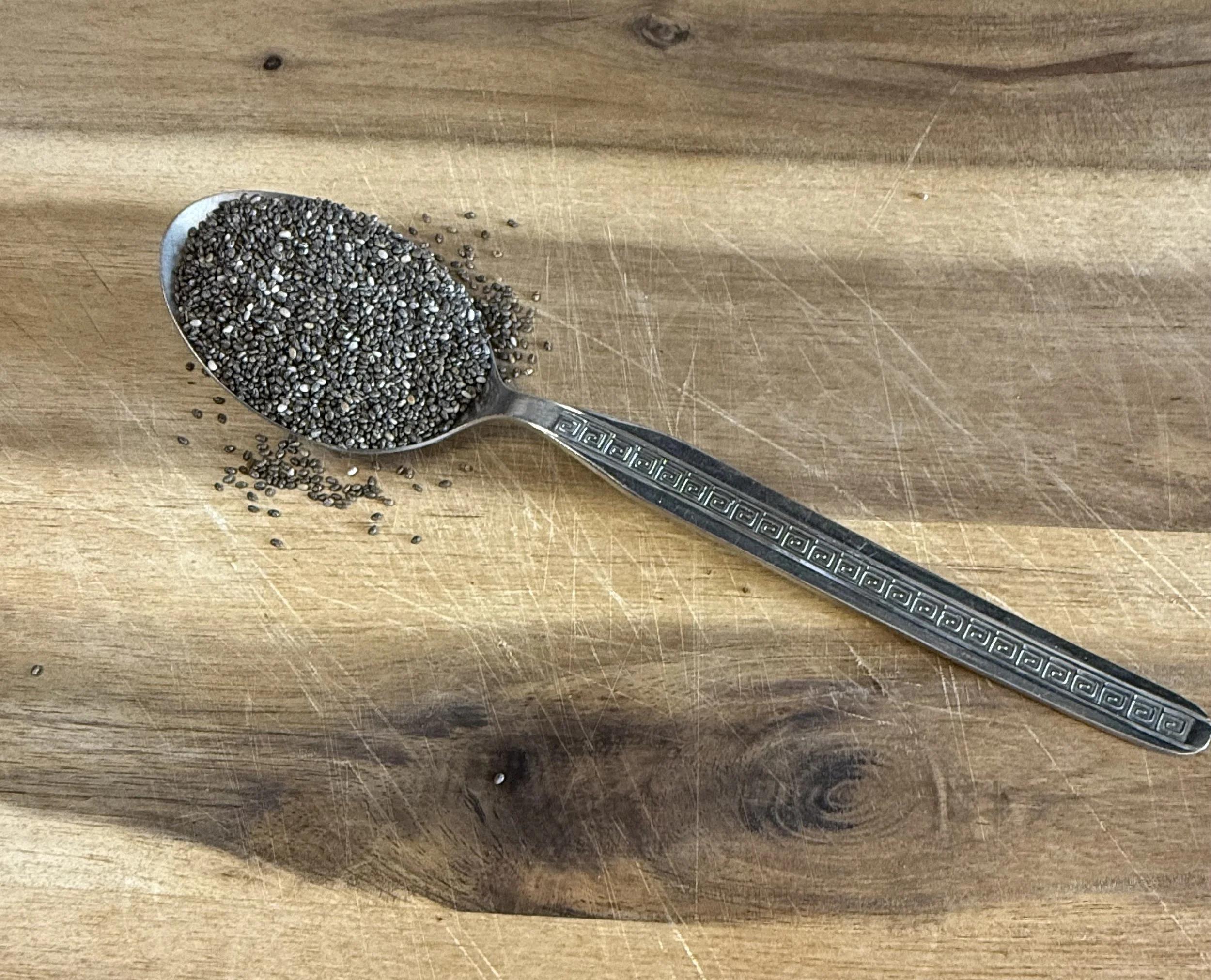
Chia seeds
Delicious soaked in almond milk (or any milk of your choice). Enjoy as chia pudding or add to Greek yogurt in the morning. I always keep a jar of chia seeds soaked in almond milk in the fridge.
Nutritional value for 1 tablespoon of chia seeds (approximately 12g)
Protein: 2g
Calcium: 75mg
Fibre: 5g
They also contain phosphorus (95mg), magnesium (40mg), iron (1mg) and omega-3 (2.5g). Twelve grams of chia seeds provide about 60 calories.